Group Think Will Kill Your Best Idea Before It Ever Breathes
You know the feeling. You've got something. Not a half-formed thought, not a vague direction — an actual thing. A concept so clear in your head it almost hums. So naturally, you do what every well-meaning creative person does: you share it. You send it to your group chat, you bring it to your creative circle, you post it in the Discord server. And then you wait.
The feedback comes in. Some of it is smart. Some of it is well-intentioned but totally off-base. Some of it contradicts itself. And somewhere in the process of trying to honor all of it, your idea starts to look like a rental car — functional, inoffensive, and completely forgettable.
This is the collaboration trap. And it catches almost everyone.
Why We Mistake Noise for Progress
Feedback loops feel productive. They feel like momentum. When people are responding, reacting, pushing back — there's energy in that. It can masquerade as creative development when it's actually just creative erosion.
The problem isn't that other people have bad ideas. The problem is that group feedback is almost always optimized for consensus, and consensus is the enemy of anything genuinely new. When you put a bold concept in front of five people, you're not getting five perspectives that sharpen your vision. You're getting five sets of anxieties, preferences, and blind spots that collectively pull your work toward the middle.
Social psychologists call this phenomenon groupthink — the tendency for group dynamics to suppress dissent and flatten outlier thinking in favor of agreement. In corporate boardrooms, it produces mediocre decisions. In creative spaces, it produces mediocre work.
And here's the part nobody wants to say out loud: most creators are addicted to the feedback loop not because it improves their work, but because it reduces their personal risk. If everyone signed off on it, no one person has to own the failure. That's a comfort strategy dressed up as a creative process.
The Solitude Where Real Work Happens
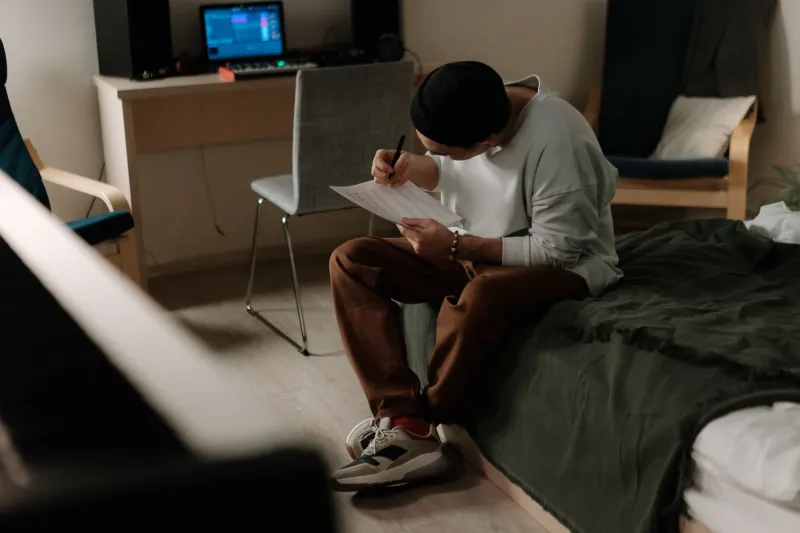
Some of the most distinctive voices in American entertainment — from early-career novelists to independent filmmakers grinding out their first features — share a common practice: a protected period of solitude before any external input enters the room.
This isn't about being precious or isolated. It's about giving your idea enough internal development that it can actually withstand feedback without collapsing under it. A half-formed concept handed to a group gets reshaped by the group. A fully realized vision handed to a group survives the conversation.
Think about it this way: when a building's structural frame is still going up, you can push it over with one hand. Once the concrete sets, it can hold weight. The same principle applies to creative work. The solitude phase isn't avoidance — it's the setting of the concrete.
Writer and filmmaker John Waters has talked about the importance of protecting your weirdest instincts long enough to actually execute them. His point isn't that he doesn't value other perspectives — it's that those perspectives need to arrive after he's committed to the core of what he's making. Otherwise, the weirdness gets sanded off before it ever has a chance to become the thing people actually love.
When Feedback Actually Helps
Here's where the nuance lives, and it matters: not all external input is poison. The question isn't whether to get feedback — it's about when and from whom.
Feedback is genuinely useful when:
- Your vision is already locked. You know what you're making and why. Now you need someone to tell you where the execution falls short of the intention.
- You're asking specific questions. "Does this opening scene establish tone?" is a useful question. "What do you think?" is an invitation for someone else to write your project.
- The person giving feedback has relevant expertise or taste. Not just someone who cares about you — someone who actually understands the territory you're working in.
- You're in the revision stage, not the conception stage. Early drafts need protection. Late drafts need honest eyes.
The difference between good collaboration and the collaboration trap is specificity and timing. Blur either one, and you're back in the group chat watching your best idea get workshopped into something nobody asked for.
Protecting the Work Without Becoming Unreachable
There's a version of this conversation that tips into creative arrogance — the "I don't need anyone" posture that usually comes with its own set of blind spots and unchecked mistakes. That's not what this is about.
The goal isn't to become isolated. It's to become intentional. To build a creative process where you're in charge of the timeline, where you decide when your work is ready for outside eyes, and where you've developed enough internal clarity that feedback informs rather than dictates.
Practically, that might look like:
- Setting a personal rule that you don't share new concepts until you've spent at least two weeks developing them alone.
- Building a small, trusted inner circle — two or three people max — whose taste and honesty you actually trust, rather than crowdsourcing to everyone who's available.
- Learning to sit with discomfort when an idea is unfinished. The urge to share early is often just anxiety looking for relief.
Your best ideas are not group projects in their early stages. They're fragile, strange, specific things that need room to become themselves before the world gets a vote.
The Creator Who Protects the Spark
At the end of the day, the creators who consistently produce work that feels genuinely original — the ones whose stuff stops you mid-scroll and makes you pay attention — are almost never the ones who built it by committee. They're the ones who held something close long enough to understand it themselves, then let the right people in.
The feedback loop isn't inherently bad. But when it becomes a substitute for conviction, when it's where you go to avoid the terrifying responsibility of having a real point of view, it will quietly dismantle everything worth saving in your work.
Protect the spark. Let the group in later. Your best ideas will thank you.