One Name, Every Credit: The Rise of the Solo Creative Empire
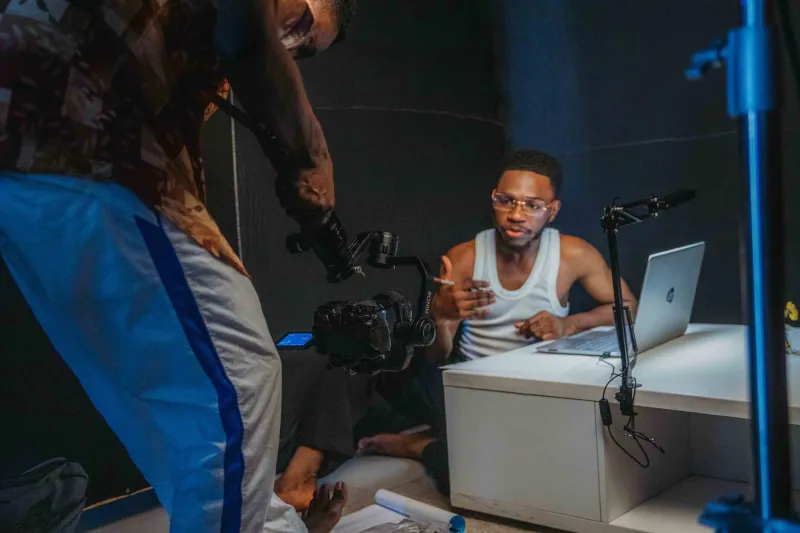
Scroll through the credits of the stuff you actually love right now. Not the stuff Netflix spent $200 million on — the stuff a friend sent you at 1 a.m. with the message "how does ONE person do this?"
Chances are, one person did do it. Wrote it, shot it, scored it, cut it, posted it, and replied to your comment about it. The one-person creative empire isn't a novelty anymore. In America, it's becoming the flex.
The Stack Is the Story
There's a reason the solo model is thriving right now, and it isn't just stubbornness. The tooling finally caught up to the ambition. A laptop that fits in a backpack can run a full recording session, cut a feature-length edit, and host the storefront where you sell the finished thing. Distribution platforms — YouTube, Bandcamp, Substack, itch.io, Gumroad — collapsed the distance between maker and audience to basically zero.
What used to require a label, a publisher, a studio, and a publicist now requires a person and a Wi-Fi connection. That's not a small shift. That's the entire gatekeeping apparatus becoming optional.
And audiences have noticed. There's a growing trust in work with a single visible name on it. No committee, no focus group, no brand voice. When one person signs every frame, every note, every sentence, the work carries a kind of accountability that committee-made content can't fake. You know exactly who to praise and exactly who to hold responsible.
What Total Control Actually Costs
Here's the part the highlight reels skip: doing everything yourself means being mediocre at several things before you're good at one.
The novelist who also has to run her own ad campaigns. The filmmaker who spends more hours on thumbnail design than on cinematography. The indie developer who answers support emails at midnight because there's no one else to answer them. The solo creator's calendar is a graveyard of tasks nobody warned them about — invoicing, metadata, rights management, the endless content treadmill.
The mental toll is real, too. When you're the entire company, there's no one to catch you on a bad week. No colleague to say "that draft is fine, ship it." Every decision, good or catastrophic, traces back to you. Isolation is the quiet tax on the solo path, and plenty of one-person empires have folded not from lack of talent but from lack of a second brain in the room.
The trade-off, though, is intoxicating: nobody can dilute your vision. No note from a marketing department. No compromise at the finish line. You own the upside completely — and the work shows it.
Why the Audience Cares Who Made It
Something interesting has happened culturally. After two decades of content engineered by algorithm and assembled by teams, audiences have developed a taste for the visible hand. Knowing a single person made something changes how you receive it. It feels like correspondence, not product.
That's why "made by one guy in his garage" has become a selling point instead of an apology. It signals stakes. It signals that someone cared enough to do the unglamorous parts. In an economy drowning in outsourced, anonymous output, the solo creator is the last place you can find genuine authorship.
Building Yours Without Burning Down
If you're eyeing the solo path, a few honest ground rules:
- Pick your core skill and protect it. Everything else is negotiable; the thing only you can make is not.
- Automate or outsource the boring 20%. Scheduling tools, templates, and the occasional freelancer are not a betrayal of the solo ethos. They're survival gear.
- Finish small things publicly. A solo empire is built on shipped work, not perfect work.
- Find your peers. Other solo creators are the closest thing you'll get to coworkers. Treat them that way.
The one-person show isn't for everyone. It's slow, it's lonely, and you will spend real hours on tasks a mid-level employee at a studio would find beneath them. But the creators who stick it out end up with something rarer than a big budget: a body of work that is unmistakably, entirely theirs. In 2025 America, that might be the most valuable credit of all.