The People You Keep Out: Why Protecting Your Process Is the Most Underrated Creative Skill
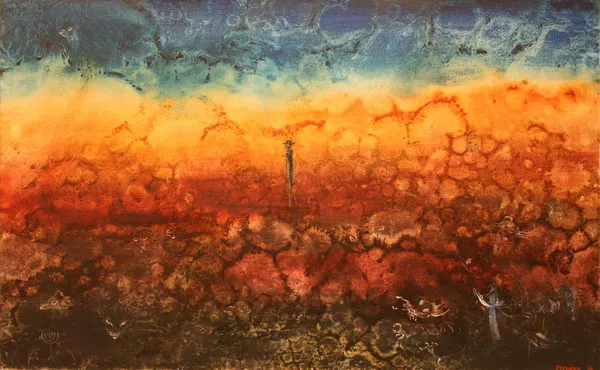
Photo: Afroyim Soshana, CC BY-SA 3.0, via Wikimedia Commons
Everybody loves a good collaboration story. Two people meet, sparks fly, something magnificent gets made. It's a tidy narrative, and the entertainment industry has been selling it for decades. But spend enough time watching how creative careers actually unfold — not the highlight reel version, the real one — and a different pattern starts to emerge.
The artists who built something durable? A lot of them got there by saying no. A lot of them, quietly and sometimes at real professional cost, kept people out.
Collaboration as Default Setting
Here's the thing nobody wants to say out loud: the pressure to collaborate is often more about optics than output. Saying yes to a co-writer, a creative partner, or a consulting producer signals openness. It signals that you're a team player, that you're not precious about your vision, that you can play well with others. In rooms where deals get made, that perception matters.
But perception and great work are not the same thing. And for a certain kind of creator — the kind who operates from a very specific internal frequency — bringing in a collaborator doesn't add to the signal. It introduces static.
Think about how Beyoncé structures her creative world. Yes, she works with producers, songwriters, and directors. But the architecture of what she makes is hers, and the people she pulls in are executing a vision she already holds. That's not really collaboration in the traditional sense. That's curation. She's not inviting people to co-author her perspective — she's selecting craftspeople who can serve it.
The distinction matters enormously, and most conversations about collaboration completely miss it.
The Dilution Problem
Creative dilution is sneaky. It rarely announces itself. It doesn't show up as a blowout argument in the studio or a dramatic falling out. It shows up as a scene that's slightly less sharp than it was before the notes session. A song that's technically more polished but somehow less alive. A chapter that reads smoother but no longer sounds like you.
When you add voices to a creative process, you're not just adding ideas — you're adding competing instincts, personal aesthetic histories, and the very human need to leave a mark. Most people, even well-intentioned ones, will nudge your work toward something more familiar to them. That's just how it works. It's not malice. It's just that everyone carries their own gravitational pull.
The creators who protect against this aren't antisocial or arrogant. They've just learned to recognize the feeling of their work drifting — and they've decided that feeling is worth avoiding.
Coen Brothers films work because Joel and Ethan Coen built a creative system that is, for all practical purposes, sealed. They famously edit their own work under a pseudonym specifically to keep that part of the process theirs. Dave Chappelle spent years walking away from rooms that wanted to add too many voices to his comedy. Both examples look like stubbornness from the outside. From the inside, they're acts of preservation.
How to Tell the Difference
So how do you know when a collaboration is going to sharpen your work versus sand it down? A few questions worth sitting with:
Does this person see what you're trying to build, or are they excited about what they'd build with your materials? There's a real difference. One type of collaborator serves the vision. The other type is just using the project as a vehicle for their own expression — which might produce interesting art, but it won't produce your art.
Does the partnership require you to explain yourself constantly? Good creative relationships have a fluency to them. You're not spending half your energy defending choices or translating your instincts into language someone else can accept. If every session feels like a negotiation, that's data.
What happens to your energy after you work together? This one's underrated. After a genuinely productive collaboration, you typically leave with more momentum than you came in with — more clarity, more fire. After a draining one, you feel flattened. Pay attention to that.
The Cost of Saying No
Let's be honest — keeping people out has real costs. Relationships take a hit. Opportunities occasionally get passed over. In an industry that runs on favors and access, being selective can read as difficult. Some doors close.
But here's the trade-off that rarely gets named: the cost of saying yes to the wrong collaboration is often your best work. Not your worst work — that's not usually what's at stake. It's the work that could have been your most specific, most resonant, most fully realized version of itself. That's what gets compromised. And that loss is diffuse enough that you might not even notice it clearly until years later.
The creators who figured this out early — who learned to draw a line around the most essential part of their process and defend it — didn't do it because they had something to prove. They did it because they'd already experienced the alternative, and they knew what it cost.
Selective, Not Closed
None of this is an argument for isolation. Some of the most electric creative work in American entertainment came from genuine partnerships — think Tina Fey and Amy Poehler, or the early Kanye West production circle, or Lin-Manuel Miranda's relationship with his dramaturg. Those collaborations worked because the people involved shared a core frequency. The vision wasn't up for debate; the execution was where the partnership lived.
The goal isn't to close yourself off. The goal is to be ruthlessly honest about what kind of input actually makes your work better versus what kind just makes it different. Because different isn't always better. Sometimes it's just noisier.
The most underrated skill in any creative career might be the ability to look a good opportunity in the eye and say: not this one. Not because you're afraid, and not because you're precious — but because you know what you're protecting and you've decided it's worth it.