What the Invisible Years Are Actually Building: The Hidden Apprenticeship Behind Every Overnight Success
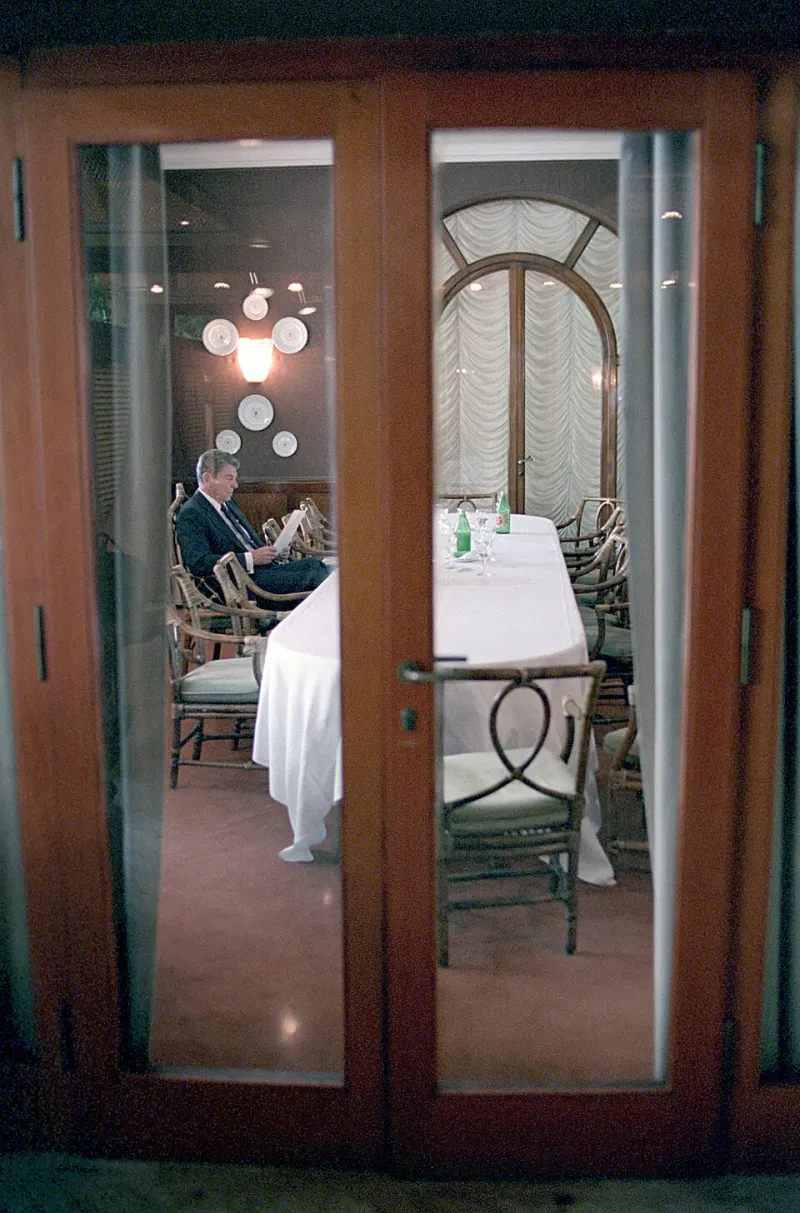
Photo: President (1981-1989 : Reagan). White House Photographic Office. 1981-1989, Public domain, via Wikimedia Commons
The story always starts at the moment things got interesting. The debut that landed. The record that broke through. The pilot that got picked up. That's where the narrative begins, because that's the part worth telling at a dinner party.
But there's another story — quieter, longer, and honestly more instructive — that almost never makes it into the profile. It's the decade before any of that. The years when the work was happening in full obscurity, when the audience was zero or close to it, when the only reason to keep going was some stubborn internal pull that didn't have a name yet.
That story is the one worth paying attention to.
The Pressure to Arrive Early
Social media has done something strange to the timeline of creative ambition. The visibility of other people's wins — the viral moment, the sudden follower spike, the overnight deal — has compressed what feels like a reasonable runway. If you've been at something for three years and you're not seeing traction, the algorithm has a way of making that feel like failure.
It's not. But the noise is loud enough that a lot of genuinely talented people start to doubt themselves at exactly the wrong moment — right when the invisible work is actually compounding.
Conan O'Brien spent years writing for other people before he was ever in front of a camera. He was a Harvard Lampoon editor, then a writer on Saturday Night Live, then on The Simpsons — doing foundational work that nobody outside those rooms saw. By the time he got his shot hosting Late Night in 1993, he had a decade of craft behind him that made him strange and specific in ways that couldn't have been manufactured quickly. That strangeness is what made him last.
The invisible years weren't a waiting room. They were the training ground.
What Obscurity Actually Teaches You
Here's what working without an audience gives you that working with one never can: permission to fail without consequence.
When nobody's watching, you can try things that don't work. You can make something genuinely bad and learn from it without it becoming part of your public record. You can experiment with form, voice, and subject matter in ways that would feel too risky if eyes were already on you.
This is not a small thing. The creators who get famous early — before they've had that private experimentation phase — often spend years afterward trying to quietly develop the range they skipped. Sometimes they never get there. The scrutiny that comes with visibility makes genuine risk-taking harder, not easier.
Taylor Swift is a useful case study here. She was signed at 14 and releasing music at 16, which sounds like the opposite of this argument. But look at what she was doing in those early years: writing obsessively, co-writing with Nashville veterans, absorbing the mechanics of songcraft at a rate that most artists don't hit until their late twenties. The audience was there early, yes — but so was the grind. She was doing the invisible work in public, which is a harder version of the same thing.
The point isn't that you need to be anonymous. The point is that you need the reps, and the reps take time.
Compounding in the Dark
There's a financial concept that applies here almost perfectly: compound interest. Small gains, reinvested consistently over time, produce results that look dramatic from the outside but are actually just the math of patience.
Creative skill compounds the same way. Every story you tell makes the next one a little easier. Every performance sharpens your instincts slightly. Every project you finish — especially the ones nobody sees — adds to a foundation that eventually becomes structural.
The problem is that compounding is invisible while it's happening. You can't feel yourself getting better in real time. The improvements are too incremental, too granular. Which is why so many people quit right before the curve bends.
America's most durable entertainers — the ones who are still relevant 20 years in — almost universally share this pattern. Chris Rock was doing stand-up in small New York clubs for years before he became a household name. His early HBO specials were good, but Bring the Pain in 1996 was something else entirely. That wasn't luck. That was a decade of club sets, of failing in front of 40 people, of figuring out what he actually had to say and how to say it. The ten years of relative obscurity made that special possible.
The Viral Trap
Going viral early sounds like a win. Sometimes it is. But there's a version of early virality that's actually a trap — one that locks you into a moment before you've had time to figure out what you're really building.
When your first piece of content blows up, the pressure to replicate that specific thing is enormous. The algorithm rewards it. The audience expects it. And suddenly you're not developing your range — you're manufacturing repeats of the thing that worked once.
Creators who build in obscurity first don't have that problem. They've had time to find out what they actually care about, what they're genuinely good at, and what they want their body of work to say over the long haul. When the audience finally arrives, those creators have something real to offer — not just a moment, but a whole perspective.
What to Do With the Invisible Time
If you're in the early, unwitnessed phase of your creative life right now, here's the most honest advice available: use it.
Not as a waiting room. Not as a countdown to when things get real. Use it as the laboratory it actually is. Make things that scare you. Try the format you're not sure you can pull off. Write the piece nobody asked for. Build the thing that might not work.
Document your process, not for an audience, but for yourself — because looking back at your own evolution is one of the most clarifying things a creator can do. You'll see the compounding in retrospect even if you can't feel it in the moment.
And when the pressure to go viral, to get seen, to arrive now gets loud — remember that the most competitive thing you can do is be further along than anyone realizes. The invisible years aren't falling behind. They're building the gap.