Your Money, Your Rules: The Real Math — and Mess — of Funding Your Own Creative Vision
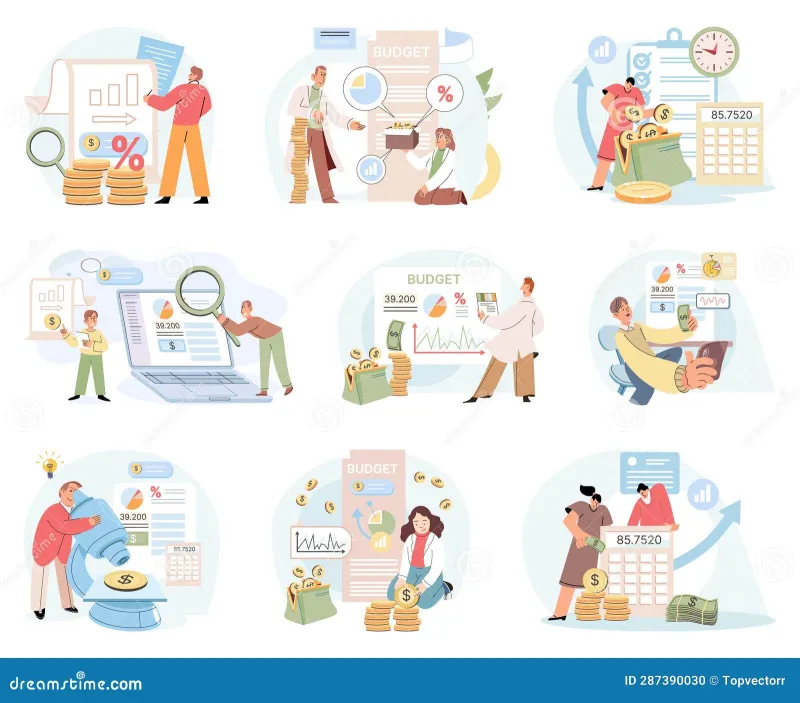
Photo: entrepreneur counting money budget planning creative project, via thumbs.dreamstime.com
Let's skip the inspirational part for a second and talk about what self-funding your creative work actually looks like on a Tuesday afternoon when the project is three months over schedule and your savings account is sending you anxiety in the form of a low balance notification.
It looks like doubt. It looks like spreadsheets you didn't want to make. It looks like quietly calculating how many months you have left before you have to make a decision you don't want to make.
And it also, genuinely, looks like freedom. The kind that's hard to explain to someone who's never had it.
Both things are true. That's the honest version of this conversation.
Why Creators Bootstrap in the First Place
Most creators don't choose to self-fund because it's the smart financial move. They do it because the alternative — chasing institutional money, pitching studios, courting investors — requires trading something they're not willing to trade.
Control, usually. But also time. And often, the very thing that makes the project worth making.
The development process in mainstream entertainment is famously corrosive to original vision. A concept gets optioned, notes get given, the concept gets softened, the edges get sanded, and by the time it reaches production, the creator who originated it is sometimes barely recognizable in the finished thing. That's not a conspiracy — it's just what happens when you bring in stakeholders who have their own risk calculus.
Self-funding is, at its core, a bet that your uncompromised version of the thing is worth more than the safety net someone else's money provides. That bet doesn't always pay off financially. But it pays off in ways that matter to a specific kind of creator.
The Actual Numbers
Here's where most articles on this topic get vague. Let's not do that.
A short film in the US can realistically be made for anywhere between $5,000 and $50,000 depending on scope, crew size, and location. A self-published book — done properly, with real editing and design — runs $3,000 to $8,000 if you're not cutting corners. A podcast with decent production quality? You can get started for under $1,500 in equipment, though ongoing costs (hosting, editing, marketing) stack up. An independent music project, from recording to distribution, can range from $2,000 for a lean EP to $20,000 or more for a full-length record with real production.
These numbers are not small. For most people, they represent months of savings, a depleted emergency fund, or debt. That's not a detail — it's the central psychological reality of what self-funding actually means.
And here's the part that gets left out of the success stories: most self-funded creative projects don't recoup. Not because they're bad, but because distribution is hard, attention is expensive, and the economics of independent creative work are genuinely brutal. The financial return on most bootstrapped projects is negative, at least in the short term.
Knowing that going in doesn't mean you shouldn't do it. It means you need to be honest about what you're actually buying.
What You're Actually Buying
When you self-fund, you're not just buying a finished product. You're buying a specific kind of creative experience — one where every decision is yours, where nobody can pull the plug, where the work reflects exactly what you intended it to reflect.
For some creators, that's worth a lot. For others, it's not worth the financial risk. Neither answer is wrong.
Ed Burns has been making independent films for decades, often with tiny budgets that he funds through a combination of personal money and small-scale investors. His films don't make Avengers money. But they're exactly his films, made on his terms, with his voice intact. He's talked publicly about the trade-off — less scale, total creative authority — and he's clearly decided that's the right deal for him.
Robert Rodriguez famously raised the budget for El Mariachi by enrolling in medical research studies. The film cost $7,000. It launched a career. That's an extreme case, but the principle is the same: the constraint forced a kind of creative problem-solving that a bigger budget would have let him avoid — and the film was better for it.
Constraint, it turns out, is one of the things self-funding reliably produces. And constraint is one of the most underrated creative tools available.
The Psychological Weight
The financial stress of self-funding is real and documented. But there's a psychological dimension to it that doesn't get discussed as much: the weight of being the only one who believed in it.
When you take institutional money, you have external validation. Someone looked at your project and decided it was worth investing in. That's not nothing. It quiets a certain kind of doubt.
When you self-fund, that validation doesn't exist. You're working on pure internal conviction — which is both energizing and exhausting. The moments of doubt hit differently when you're the one who put up the money. Every slow day, every creative block, every piece of negative feedback lands with the added weight of and I paid for this.
The creators who navigate this well tend to share one trait: they've separated their financial investment from their creative judgment. They've decided, before they start, that the money is already spent — that it's the cost of making the thing, not a bet they expect to win back. That mental shift doesn't make the stress disappear, but it stops the financial anxiety from contaminating the creative process.
The Freedom Dividend
Here's what makes it worth it for the people who choose this path: the freedom dividend.
When no one else has a financial stake in your project, you can change direction mid-stream without a meeting. You can scrap the version that isn't working without anyone's approval. You can make the weird choice, the risky choice, the choice that might not land — because the only person you're accountable to is yourself.
For certain projects, that freedom produces work that simply couldn't exist any other way. The independent film that never would have survived studio notes. The album that would have been pushed toward radio-friendly compromise. The book that an agent would have told you to soften.
Self-funding doesn't guarantee better work. But it guarantees your work. And for some creators, at some stage of their career, that distinction is everything.
The math isn't always pretty. The psychological cost is real. But the question isn't whether self-funding is the smart financial move — it usually isn't. The question is whether what you get on the other side is worth what it costs to get there.
Only you can run that math. But at least now you know what you're actually calculating.