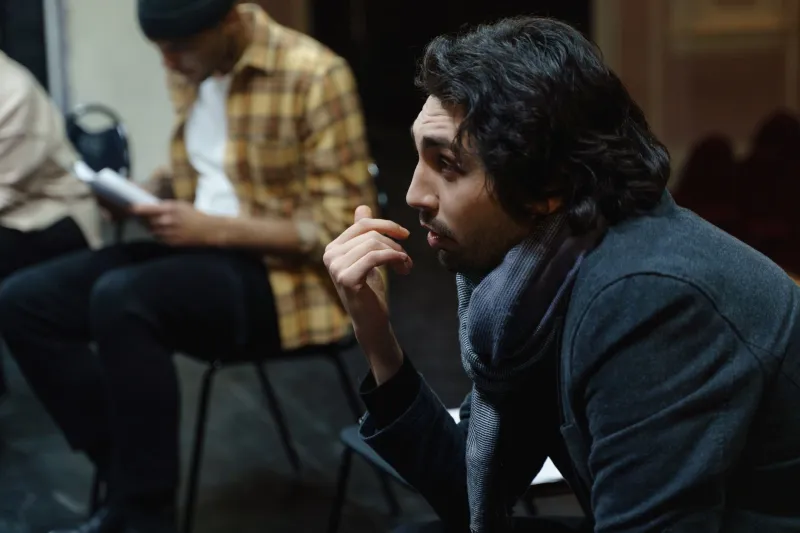
When Loyalty Becomes a Leash: How Creators Get Stuck in Rooms They've Already Outgrown

When Loyalty Becomes a Leash: How Creators Get Stuck in Rooms They've Already Outgrown
There's a moment a lot of creators never talk about. It's not the big rejection or the public failure. It's quieter than that. It's the moment you realize the room you're in — the platform, the collaboration, the audience you've been nurturing for years — stopped growing with you. And instead of leaving, you stayed. Because leaving felt like betrayal.
Loyalty is a beautiful thing when it's mutual. When the people around you, the platforms you built on, or the audiences you serve are genuinely invested in where you're going next, loyalty is fuel. But somewhere along the way, a lot of creators in this country got handed a version of loyalty that looked more like a contract with no exit clause. Stay. Keep showing up. Don't rock the boat. And whatever you do, don't outgrow us.
That's not loyalty. That's a leash.
The Subtle Shift Nobody Warns You About
It doesn't happen all at once. That's the tricky part. There's no single moment where your collaborator turns cold or your audience stops showing up. Instead, it's a slow drift. The feedback starts feeling like noise. The engagement numbers flatten. The conversations you used to have — the ones that pushed you somewhere new — start circling the same drain. But you tell yourself it's a phase. You've been here before. You just need to push through.
Except this time, pushing through doesn't feel like growth. It feels like maintenance. And maintenance is fine for a while, but it's not why most creators got into this in the first place.
The psychological pull here is real and it's worth naming directly. Humans are wired for consistency. We attach meaning to the relationships and communities we've built, and we're conditioned — especially in American creative culture, where the "grind and stay loyal" narrative runs deep — to see persistence as virtue. Quitting is for people who couldn't hack it. Pivoting is just quitting with better PR. So creators stay. Not because the room still serves them, but because leaving feels like admitting failure.
Devotion vs. Fear: Knowing Which One Is Actually Driving You
Here's the question worth sitting with: Are you still in this room because you genuinely believe in what's being built here? Or are you in this room because you're scared of what's outside it?
Devotional loyalty has a specific energy. It's generative. It shows up in the work. You're still curious. You're still making things that surprise you. The relationship — whether it's with a creative partner, a platform, or an audience — still has some give and take. You bring something. They bring something back.
Fear-based loyalty feels different. It's defensive. You're not creating from abundance; you're protecting what you've already built. You're making decisions based on what you might lose rather than what you might gain. You're not asking "what comes next?" You're asking "what if I leave and nobody cares?"
That last question is the tell. Because the truth is, that fear is almost never about the room. It's about your own sense of worth outside of it.
The Myth of the Ungrateful Creator
American creative culture has a funny relationship with the idea of moving on. We celebrate the origin story — the scrappy start, the loyal ride-or-die audience, the collaborator who believed in you before anyone else did. And we should. Those stories matter.
But we've also built a cultural narrative that frames outgrowing those early chapters as ingratitude. The creator who pivots to a new platform gets accused of abandoning their base. The writer who shifts genres gets told they've forgotten where they came from. The filmmaker who stops making the kind of content that made them famous gets labeled a sellout.
None of that is fair. And more importantly, none of it is accurate.
Growth isn't betrayal. Evolving your creative vision isn't a rejection of the people who supported you along the way. It's actually the most honest thing you can do — both for yourself and for the audience that genuinely wants to see where you're going, not just where you've been.
The creators who stay too long in rooms that have stopped serving them don't just stall their own growth. They end up resenting the very people and places they were trying to honor. That's the real betrayal — not leaving, but staying until the bitterness sets in.
What Moving On Actually Looks Like
Leaving a room that no longer fits doesn't have to be dramatic. It doesn't require a public announcement, a callout post, or a farewell tour. Most of the time, it's quieter than that. And quieter is usually better.
A few things that actually help:
Name what the room gave you. Before you go, get honest about what this chapter actually meant. The platform that helped you find your voice. The collaborator who pushed your craft. The audience that showed up when nobody else did. Naming that clearly — even if just to yourself — keeps the exit clean. You're not running from something. You're walking toward something else.
Stop waiting for permission. One of the most common traps is the belief that someone in the room needs to release you before you can go. They don't. Your collaborator doesn't have to agree that the partnership has run its course. Your audience doesn't have to tell you it's okay to try something new. You're allowed to make that call on your own.
Let the transition be gradual. Unless the situation is genuinely toxic, you don't have to blow the door off the hinges on your way out. You can start building the next room while you're still finishing out your time in the current one. In fact, that's usually the smarter move. You get to test what's next without torching what's behind you.
Understand that not everyone makes the trip. Some of your current audience will follow you. Some won't. Some collaborators will get it. Others will take it personally. That's not a reason to stay. It's just the honest reality of growth. The people who are meant to be part of your next chapter will find their way there.
The Real Cost of Staying Too Long
Here's what nobody tells you about loyalty that's curdled into fear: it doesn't just cost you momentum. It costs you clarity. The longer you stay in a room that no longer fits, the harder it becomes to remember what you actually wanted in the first place. The work gets muddier. The creative instincts get quieter. You start making decisions based on what the room expects instead of what the work demands.
And that's a slow erosion that's genuinely hard to come back from.
The creators who last — the ones who build something that actually means something over the long run — aren't the ones who stayed loyal to every room they ever walked into. They're the ones who were honest enough to know when a chapter was over. And brave enough to turn the page anyway.
Loyalty is worth protecting. Just make sure it's loyalty to your work, your vision, and the story you're actually trying to tell — not just to the comfort of a room that stopped growing long before you were ready to admit it.